
How do football players get their jersey numbers? Meaning, rules, and selection process explained
Jersey numbers in football are more than just identifiers. They often represent a player’s position, legacy, personal preference, and sometimes even their brand identity. But how do football players actually get their jersey numbers? Is it random, chosen, or assigned by strict rules?
The answer depends on the league, the club, and the level of competition. In this article, zoomlivescore answers the question: How do football players get their jersey numbers? And also explore the traditions behind them and how modern football has made the system more flexible than ever.
How do football players get their jersey numbers?
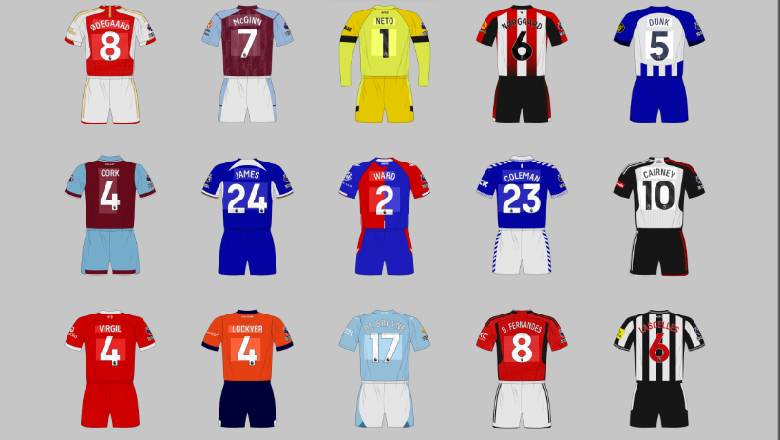
The traditional system of jersey numbers in football
Historically, football jersey numbers were strictly linked to positions on the field. This system was widely used in the early days of the sport, especially in national teams and major leagues.
Here is the traditional numbering system:
1 - Goalkeeper
2-3 - Full-backs (defenders)
4-6 - Central defenders or midfielders
7-11 - Midfielders and forwards
For example, the number 9 is traditionally given to the main striker, while number 10 is often reserved for the most creative attacking midfielder or playmaker.
This system helped fans and coaches easily identify a player’s role on the pitch.
Modern football and squad numbers
Today, football has evolved, and the strict numbering system is no longer always followed. Most professional clubs use a squad number system, where players are assigned a fixed number for the entire season.
Instead of being limited to 1-11, players can now choose numbers like 14, 21, 66, 99.
This change allows more flexibility and personal expression.
For example, famous players like Cristiano Ronaldo and Lionel Messi often keep the same number throughout their careers because it becomes part of their identity and brand.
How clubs assign jersey numbers
When a player joins a club, the process of getting a jersey number usually follows these steps:
Step 1: Available numbers check
The club checks which numbers are currently available. If a player joins mid-season, many numbers may already be taken.
Step 2: Position consideration
Some clubs still loosely follow traditional position-based numbering, especially for key roles like goalkeeper (1) or striker (9).
Step 3: Player preference
Players are often allowed to request their preferred number. If it is available, they usually get it.
Step 4: Seniority rule
If two players want the same number, senior or long-term players usually have priority.
Step 5: Marketing decisions
In modern football, clubs sometimes consider commercial value. A star player may be given a specific number for branding purposes.
Can football players choose any number?
In many professional leagues, players have many choices, but there are still limitations, such as: Some leagues limit jersey numbers from 1 to 99, or the number 1 is almost always reserved for goalkeepers. However, within those rules, players often have freedom to choose meaningful numbers, such as: Birth year (e.g., 97, 98), lucky numbers or tribute numbers for family or idols.
Famous jersey numbers and their meaning

Some jersey numbers have become iconic in football history:
Number 7 - Often worn by legendary wingers and attackers
Number 10 - Associated with creative playmakers
Number 9 - Classic striker role
Number 1 - First-choice goalkeeper
Because of these associations, some numbers carry extra pressure and prestige.
Why players keep the same number
Many professional players try to keep the same jersey number throughout their careers because: It builds personal branding, Fans associate the number with the player, Merchandise sales increase, It becomes part of their identity.
For example, when a player transfers to a new club, they may even negotiate to keep their number if it is already taken.
Special cases and exceptions
Sometimes, jersey numbers are assigned under special circumstances:
Retired numbers: Clubs retire a number to honor a legendary player
Youth promotion: Young players may receive high numbers first
Emergency assignments: Temporary numbers may be given in rare cases
Tournament rules: FIFA and other competitions may require fixed numbering systems
So, how do football players get their jersey numbers? It's based on flexible squad numbers that reflect personality, branding, and tradition. While rules still exist in professional leagues, players today have more freedom than ever to choose numbers that are meaningful to them.
Whether it’s the legendary number 10 or a unique modern squad number, each jersey tells a story about the player who wears it. If you need a reliable, easy-to-use website for the latest football news, expert match previews, and objective data updated every minute, zoomlivescore.net is designed to meet your every need.
The Most Popular
-
 How many games in the Saudi Pro League? Full guide to the Saudi League format
 -
 Ranking the 10 most famous Italian football players of all time (Update 2026)
 -
 5 Spain biggest win in football history: Legendary victories that shocked the world
 -
 Who has scored the most goals against Barcelona? Full all-time rankings and records
 -
 Key players who played for Barcelona and Man City: 5 stars who represented both football giants
 -
 Top 10 highest paid players in England 2024: Salaries, contracts, and superstars
 -
 Why are 3 countries hosting the World Cup 2026? Full explanation và impact
 -
 Who are the best Spain midfielders of all time? Top 10 legendary players ranked
 -
 The best Portugal player of all time: Why Cristiano Ronaldo stands above every legend
 -
 How much did Barcelona pay for Suarez? Barcelona transfer details